Mobile Internet in China
How to stay connected with SIM cards, eSIM, roaming, Wi-Fi, and travel apps
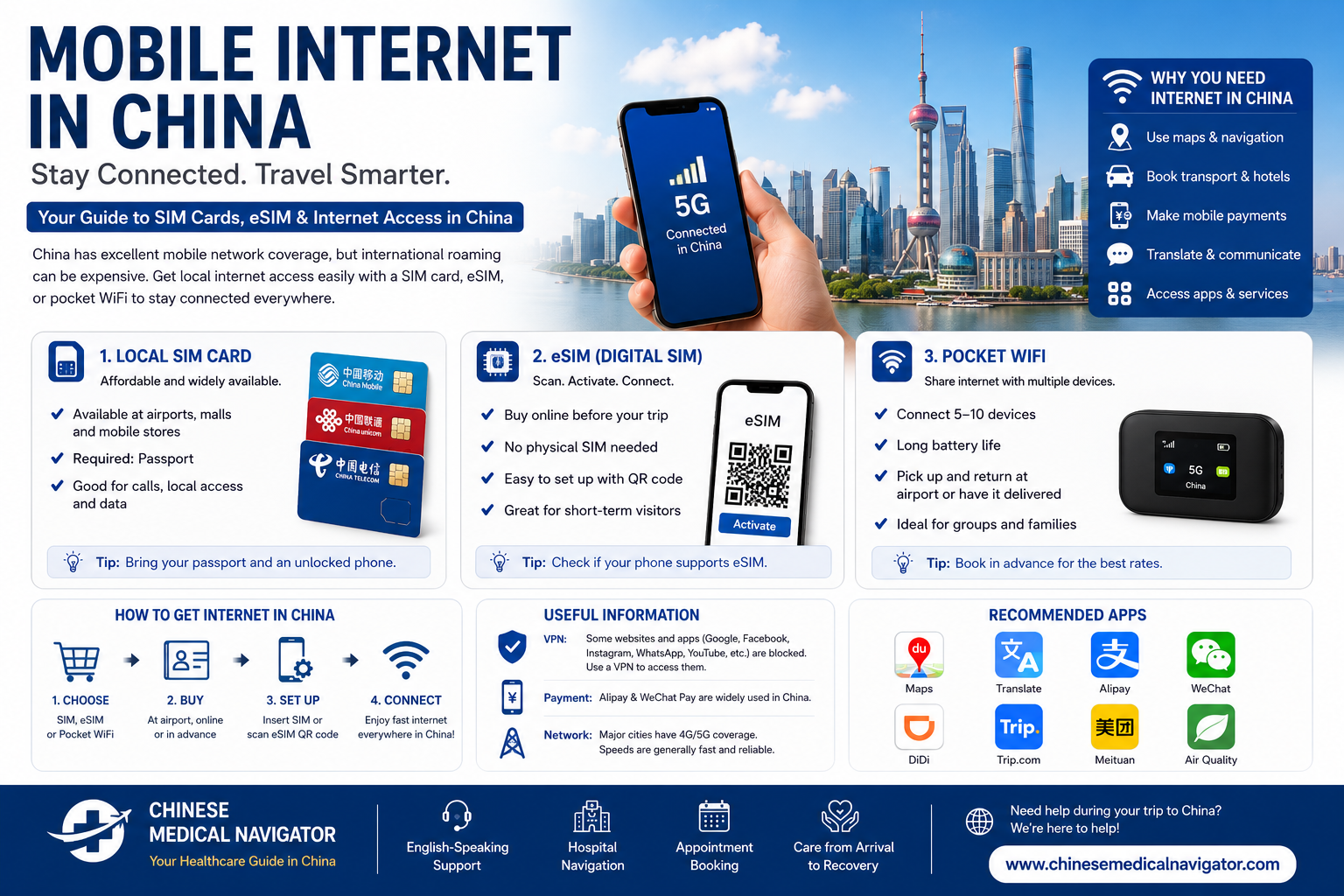
Mobile internet is essential when traveling in China. You will need it for maps, translation, Alipay, WeChat Pay, taxis, food delivery, hospital navigation, hotel communication, and train travel.
For first-time visitors, the biggest mistake is arriving in China without a working internet plan. Without mobile data, even simple tasks such as calling a taxi or finding your hotel can become stressful.
1. Main Options for Mobile Internet in China
- International roaming: easiest, but often expensive
- Travel eSIM: convenient if your phone supports eSIM
- Chinese physical SIM card: useful for longer stays
- Pocket Wi-Fi: good for groups or multiple devices
- Hotel Wi-Fi: useful backup, but not enough for daily travel
2. Option One: International Roaming
International roaming means using your normal phone number and mobile provider from your home country. It is the simplest option because you do not need to change SIM cards or buy a new plan after arrival.
However, roaming can be expensive. Before traveling, check your provider’s China roaming package, daily fee, data limit, and speed restrictions.
Best for:
- Short trips
- People who want the simplest setup
- Travelers who need to receive SMS codes from their home bank
- Visitors who do not want to change SIM cards
3. Option Two: Travel eSIM
A travel eSIM can be installed before your trip. You usually buy a plan online, scan a QR code, and activate mobile data when you arrive in China.
This is often convenient for modern smartphones. You can keep your original SIM card in your phone while using the eSIM for China data.
Best for:
- Visitors who want internet immediately after landing
- Short or medium-length trips
- People who do not need a Chinese phone number
- Travelers who prefer setup before departure
4. Option Three: Chinese Physical SIM Card
A Chinese SIM card can give you local mobile data and sometimes a Chinese phone number. This can be useful for longer stays or if you need local services.
Foreign visitors normally need a passport for real-name registration. You may be able to buy a SIM card at the airport, at official telecom stores, or through travel service providers.
Main mobile operators in China:
- China Mobile
- China Unicom
- China Telecom
Best for:
- Stays longer than one week
- People who need a local Chinese number
- Travelers using many Chinese apps
- Visitors staying in several Chinese cities
5. Option Four: Pocket Wi-Fi
Pocket Wi-Fi is a small portable router that gives internet access to several devices. It can be useful for families, small groups, or people carrying laptops and tablets.
The disadvantage is that you must charge it, carry it, return it, and avoid losing it.
6. Hotel and Public Wi-Fi
Hotels, cafés, airports, and railway stations may offer Wi-Fi. However, public Wi-Fi is not always stable, and some networks require SMS verification.
Hotel Wi-Fi is useful as a backup, but it should not be your only internet solution in China.
7. Internet Restrictions and Common Apps
Some international websites and apps may not work normally in mainland China. This can include certain social media platforms, search engines, map services, email services, and messaging apps.
Before traveling, prepare Chinese or China-friendly alternatives where possible.
- Maps: Gaode Map or Baidu Map
- Payment: Alipay and WeChat Pay
- Messaging: WeChat
- Food delivery: Meituan
- Taxis: Didi or Alipay taxi function
- Hotels and trains: Trip.com
8. Should You Prepare a VPN?
Some visitors prepare a VPN before entering China because certain international services may be restricted. If you need access to specific work tools, email, social media, or messaging apps, test your setup before departure.
Rules and performance can change, so do not rely on only one app or one method. Prepare backup communication channels.
9. Why Mobile Internet Matters for Medical Travelers
If you are visiting China for medical tests, MRI, CT, specialist consultation, or a second opinion, mobile internet is not just for convenience. It can affect your entire hospital experience.
You may need mobile internet for:
- Finding the correct hospital building
- Calling taxis between hospital and hotel
- Receiving messages from assistants or hospitals
- Using translation apps
- Making mobile payments
- Checking maps and traffic
- Ordering food while waiting for reports
10. Recommended Setup for First-Time Visitors
- Before departure: install Alipay, WeChat, Trip.com, and a China map app
- Before departure: set up a travel eSIM or roaming package
- After arrival: test mobile data before leaving the airport
- Backup: carry some RMB cash and keep hotel address screenshots
- Longer stay: consider buying a Chinese SIM card with your passport
11. Practical Checklist Before Flying to China
- Check whether your phone is unlocked
- Check whether your phone supports eSIM
- Download important apps before departure
- Save your hotel and hospital address in Chinese
- Prepare screenshots of booking confirmations
- Tell your bank you will travel to China
- Keep your home SIM active for SMS verification if needed
- Carry your original passport if you plan to buy a local SIM
How Chinese Medical Navigator Can Help
Chinese Medical Navigator helps international visitors prepare for medical visits in Beijing. We can help you understand hospital routes, appointment procedures, local transport, translation needs, and practical daily arrangements.
We do not provide diagnosis, prescriptions, or medical treatment advice. Our role is to help you navigate the process more efficiently and reduce confusion during your stay in China.
Need Help in Beijing?
We help international patients with hospital appointments, translation, patient escort and practical travel support in Beijing.
Free WhatsApp Consultation Contact Us- How Hospital Registration Works in China
- What Happens During a Hospital Visit in China
- Medical Costs in China vs Europe
- Can Foreigners Get Medical Treatment in China?
- How to Get a Second Medical Opinion in China