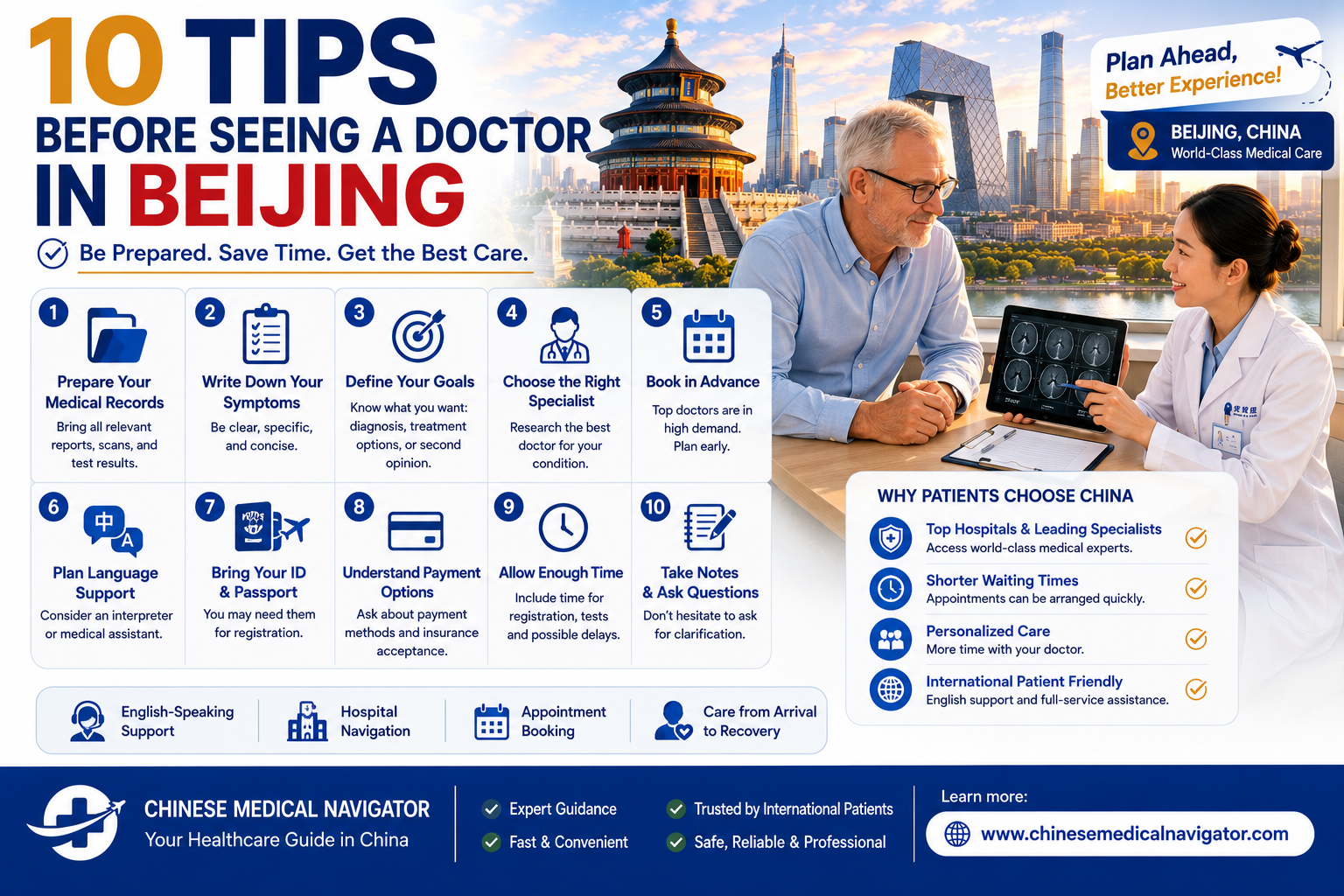
Beijing is home to some of China's most respected hospitals and medical specialists. Every year, many overseas Chinese and international patients travel to Beijing for consultations, diagnostic tests, second opinions, and treatment.
If this is your first time seeking medical care in China, these practical tips may help make your visit smoother, less stressful, and more efficient.
1. Bring All Previous Medical Records
Before traveling to Beijing, gather as many relevant medical documents as possible. Doctors can usually understand your situation faster when your medical history is clear.
Useful documents may include:
- Blood test results
- MRI reports
- CT reports
- Ultrasound reports
- Pathology reports
- Discharge summaries
- Medication lists
- Previous diagnosis documents
If possible, bring both the written reports and the original image files. For MRI and CT scans, image files may be more useful than only bringing a written summary.
2. Do Not Automatically Choose the Most Famous Doctor
Many patients believe that booking the most famous specialist is always the best choice. In reality, the most suitable doctor often depends on your specific condition, your previous test results, and the department involved.
Sometimes an experienced specialist in the correct department may be more helpful than simply choosing the most famous name.
3. Prepare a Short Medical Summary
Doctors in large hospitals may see many patients every day. A simple one-page medical summary can make communication much easier.
Your short summary can include:
- Main symptoms
- How long the symptoms have lasted
- Previous diagnosis
- Previous treatments
- Current medications
- Major allergies
- Main questions you want to ask the doctor
4. Allow Enough Time for Testing
Some patients come to Beijing expecting all consultations and examinations to be completed in one day. This may be possible for simple cases, but not always.
Some examinations may require advance booking, preparation instructions, or follow-up visits. If your condition is complex, it is better to allow flexibility in your travel plan.
5. Register for WeChat and Alipay
Many Chinese hospitals use digital systems. WeChat and Alipay are commonly used for registration, appointment management, payments, and accessing certain reports.
Setting up WeChat and Alipay before arrival can save time, especially for international patients who are unfamiliar with hospital payment systems in China.
6. Stay Near the Hospital
Beijing is a very large city. Travel times can be longer than many visitors expect, especially during rush hours.
If you need repeated hospital visits, choosing accommodation near the hospital may reduce stress and make the medical journey easier.
7. Bring a Companion if Possible
Medical visits can be physically and emotionally demanding. Having a family member, friend, translator, or medical navigator may help with communication, registration, report collection, and understanding hospital instructions.
8. Keep Copies of Everything
Save digital copies of your medical documents, receipts, imaging results, and hospital records. These may be useful for follow-up consultations, insurance claims, or second opinions.
9. Consider a Second Opinion
For complex medical conditions, obtaining a second opinion can sometimes provide additional perspectives. Many patients travel to Beijing specifically for specialist consultation and confirmation of previous diagnoses.
A second opinion does not always mean changing treatment. Sometimes it helps patients better understand their condition and available options.
10. Ask Questions
Do not hesitate to ask questions during your consultation. Patients should understand why a test is recommended, what the results may mean, what treatment options exist, and what follow-up may be required.
Useful questions to ask may include:
- What is the likely diagnosis?
- Do I need further tests?
- Are there different treatment options?
- What are the risks and benefits?
- When should I come back for follow-up?
- Can I travel after this examination or treatment?
Final Thoughts
China’s healthcare system can provide access to a large number of specialists, diagnostic tests, and treatment options. Proper preparation before your trip can save time, reduce stress, and help you get the most from your medical visit.
Chinese Medical Navigator provides hospital navigation, appointment guidance, translation support, and practical assistance for international patients visiting Beijing.
Important Notice
Chinese Medical Navigator is not a hospital and does not provide medical diagnosis, prescriptions, treatment recommendations, or medical opinions.
All medical decisions are made by licensed doctors and hospitals in China. Our role is limited to hospital navigation, coordination, translation support, communication assistance, and practical guidance.
Related Guides
- How to Use Alipay in China
- Mobile Internet in China
- How to Use High-Speed Rail in China
- Beijing Airport to City Guide
- China Travel & Practical Guides
Need Help in Beijing?
We help international patients with hospital appointments, translation, patient escort and practical travel support in Beijing.
Free WhatsApp Consultation Contact UsNeed Help Preparing for a Hospital Visit in Beijing?
If you are unsure which hospital or department may be suitable for your situation, you can contact us before your trip.
Email: contact@chinesemedicalnavigator.com
WhatsApp: +45 5380 2127