Home > China Travel & Practical Guides > China High-Speed Rail Guide
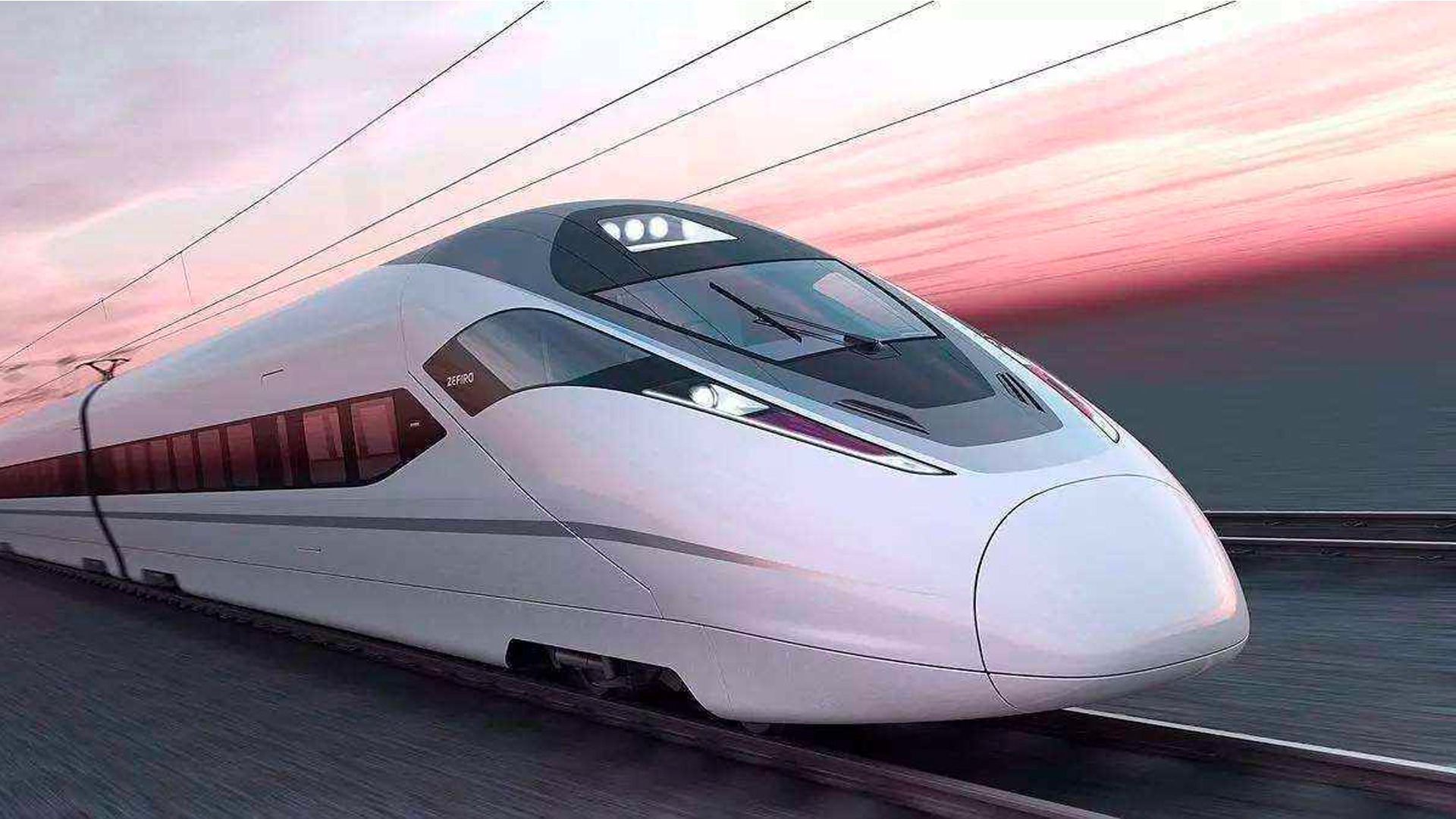
China's high-speed rail system is one of the easiest ways to travel between major cities. For many routes, taking a bullet train can be more convenient than flying because stations are often closer to city centers.
This guide explains how foreign travelers can use China's high-speed rail with a passport, including station entry, security, boarding, luggage, train facilities and practical tips.
1. Why Travel by High-Speed Rail in China?
China's high-speed rail connects many major cities, including Beijing, Shanghai, Tianjin, Nanjing, Hangzhou, Xi'an, Chengdu, Guangzhou and Shenzhen.
For foreign visitors, high-speed rail is often clean, comfortable and easy to use once you understand the basic process.
2. How to Buy High-Speed Rail Tickets
Foreign travelers usually need a passport to buy and use high-speed rail tickets in China. Your ticket is linked to your passport number.
- You can book tickets through travel platforms such as Trip.com.
- You can use the official 12306 system if you can register successfully.
- You can also buy tickets at a railway station ticket office.
- Always enter your passport name and number carefully.
3. Arrive at the Railway Station Early
Chinese railway stations can be very large. If this is your first time, arrive early. For normal travel days, arriving 30–60 minutes before departure is usually safer. During holidays, allow more time.
For a real photo walkthrough of a major Beijing station, read our Beijing South Railway Station Guide.
4. Enter the Station and Pass Security

Before entering the waiting hall, passengers usually pass a security check. Your luggage goes through a scanner, and you may need to show your passport or ticket information.
If the automatic gate does not read your passport, ask staff for the manual check lane.
5. Wait in the Main Waiting Hall
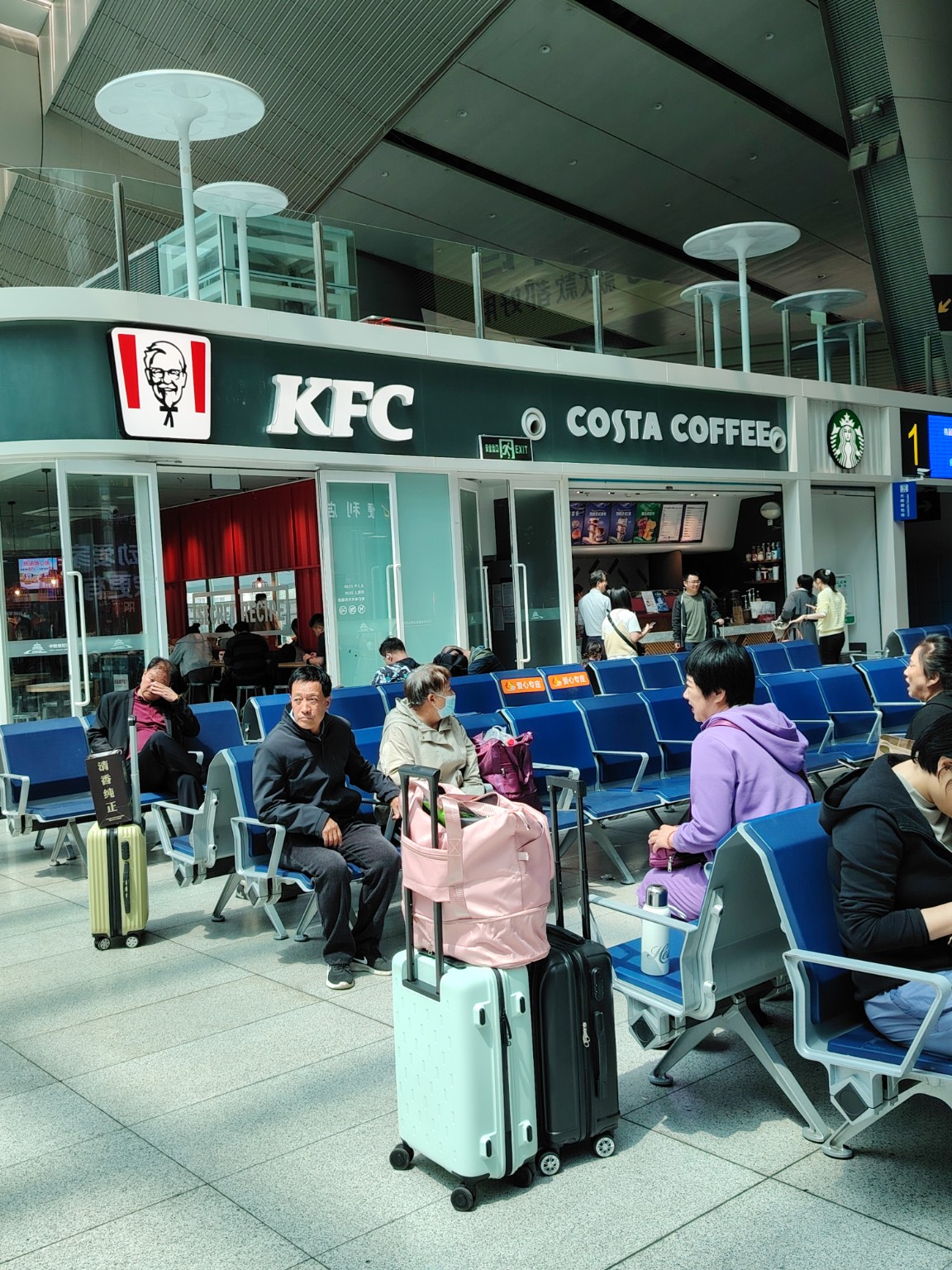
After security, you will enter the waiting hall. Large stations may have restaurants, shops, toilets, vending machines and hot water machines.
6. Check the Departure Information Board
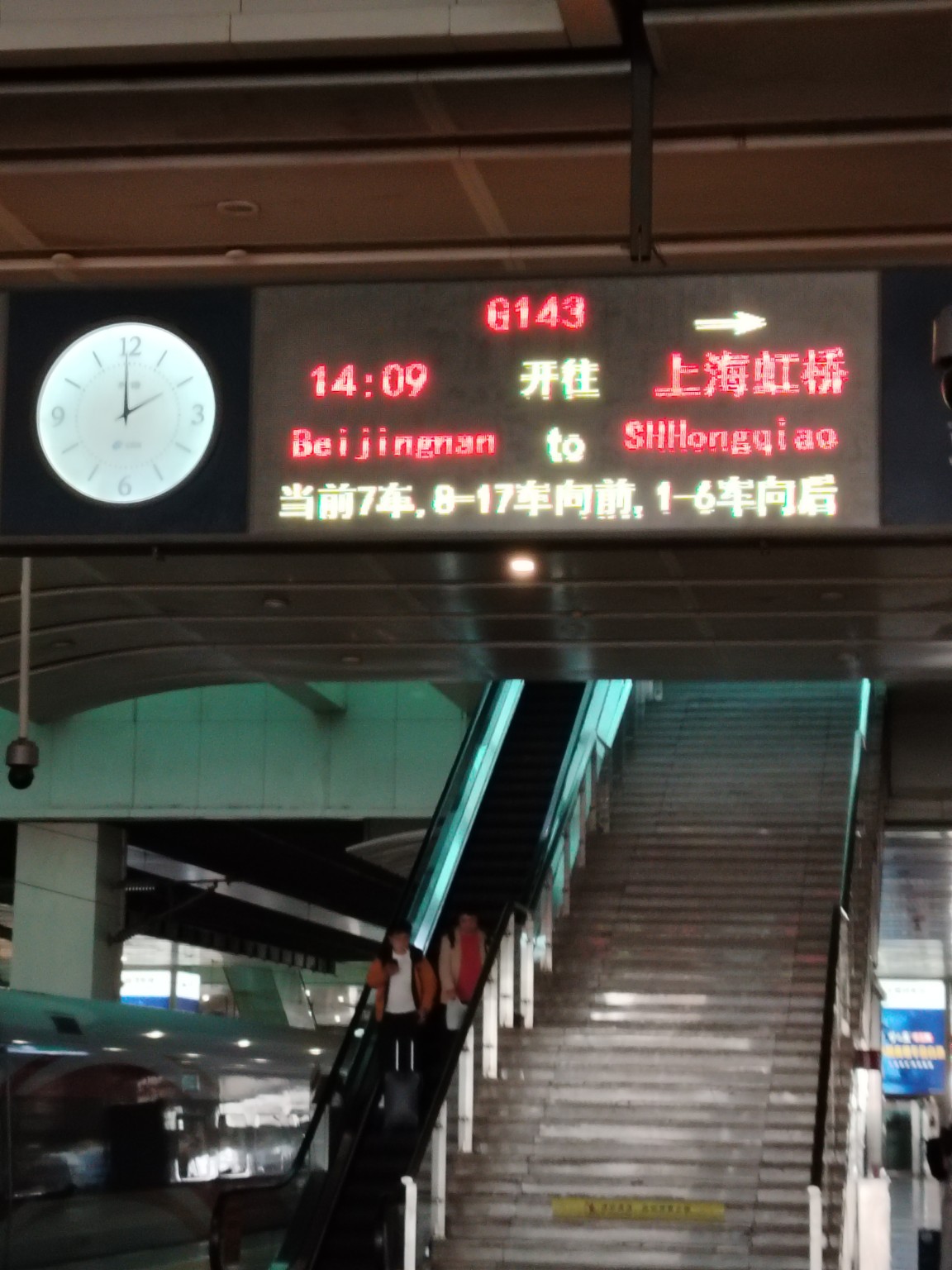
Before boarding, check the departure board carefully. Look for your train number, destination, departure time, gate and platform information.
Train numbers usually begin with letters such as G, D or C. G trains are usually high-speed trains.
7. Boarding the Train
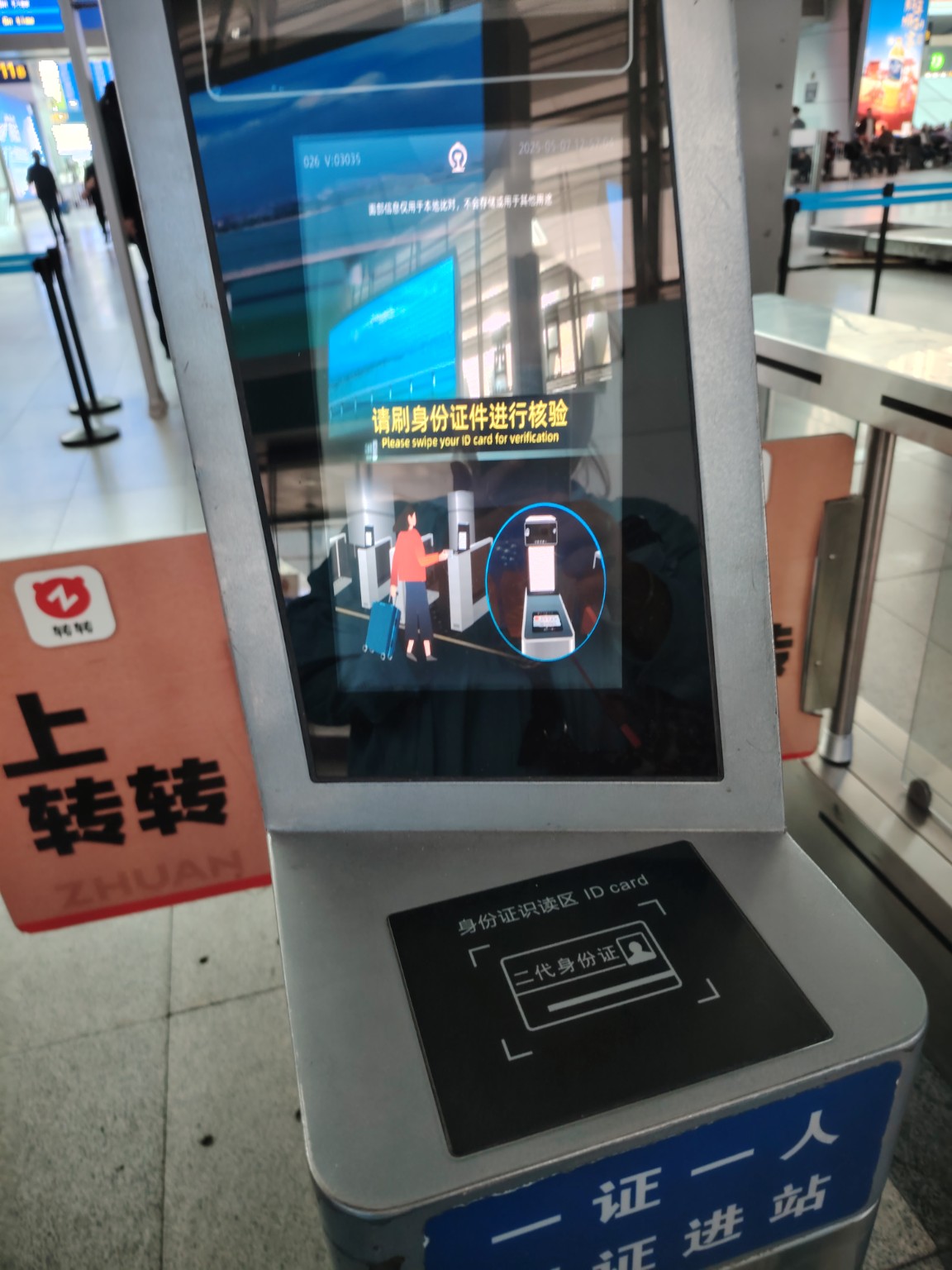
When boarding starts, follow the queue to your gate. Staff may check your passport or ticket information. Use the manual lane if the automatic gate does not work with your passport.
8. Inside the High-Speed Train
After boarding, put your luggage in the overhead rack or luggage area. Chinese high-speed trains are generally clean and organized.
Second-class seats are common and suitable for most travelers. First-class and business-class seats offer more space, but cost more.
Many trains have air conditioning, luggage racks and power outlets, but facilities may vary by train type.
9. Luggage Storage
Small suitcases and bags can usually be placed on the overhead rack. Large suitcases should be placed in the luggage area near the carriage door if available.
Keep valuables, passport, phone and wallet with you.
10. Toilets on the Train
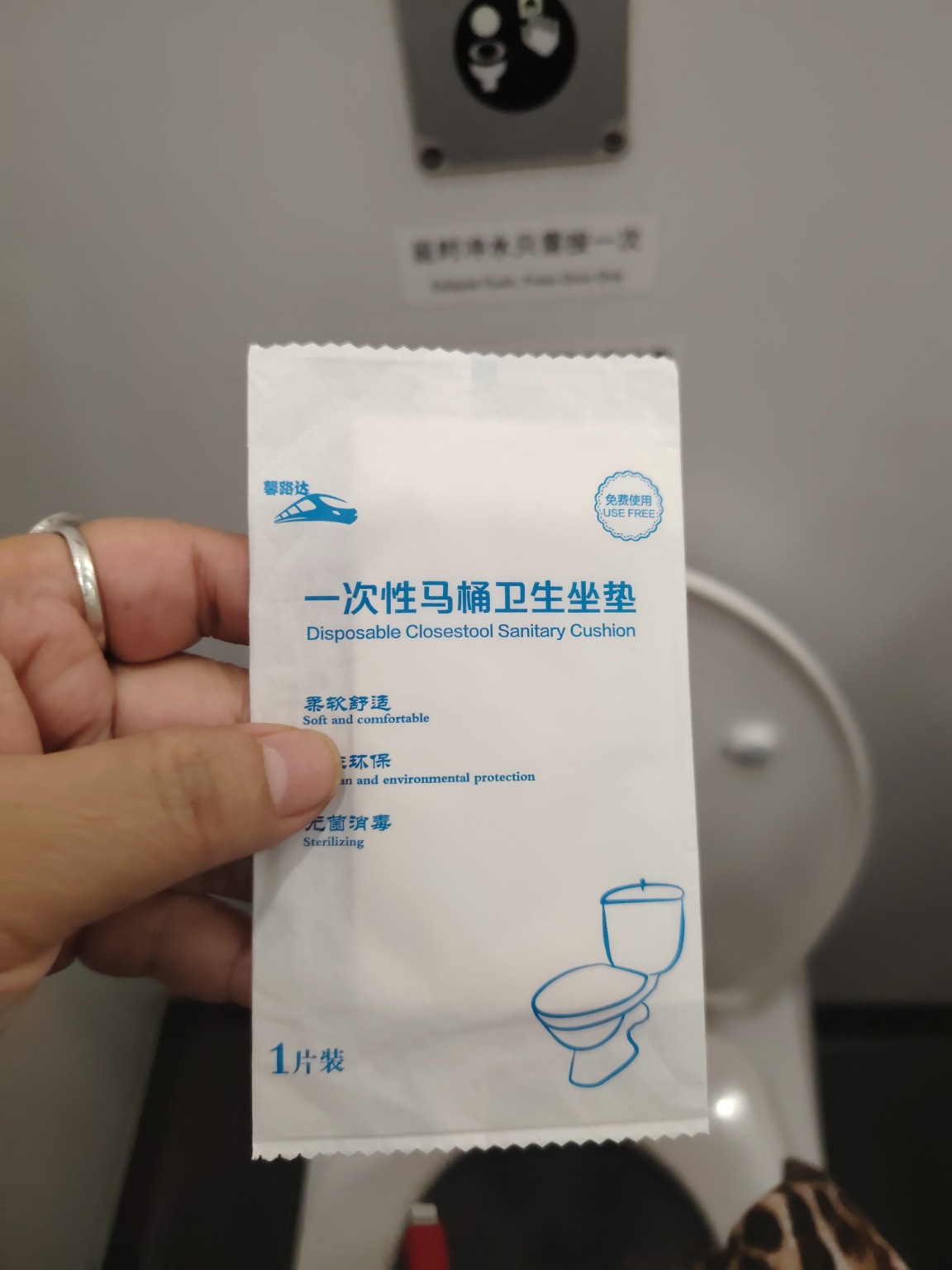
High-speed trains usually have toilets between carriages. Some trains may have Western-style toilets, while others may have squat toilets.
It is useful to bring tissues, wet wipes or disposable toilet seat covers, especially for long journeys.
11. Food and Drinks
Some high-speed trains sell meals, snacks and drinks. You may also see staff pushing a food cart. However, choices can be limited.
A practical option is to buy food and drinks before boarding. In large railway stations, you may find restaurants, KFC, Burger King, convenience stores, vending machines and free hot water.
See our Beijing South Railway Station Guide for real photos of food, hot water and shops inside a station.
12. Arriving at Your Destination
When the train arrives, follow the passenger flow and look for signs such as Exit, Taxi, Metro or Transfer.
If you are going to a hotel or hospital, prepare the Chinese address before you arrive.
China High-Speed Rail vs Domestic Flights
| China High-Speed Rail | Domestic Flight |
|---|---|
| Often city center to city center | Usually airport to airport |
| Less waiting time for many routes | Longer check-in and security process |
| Comfortable seats and more walking space | Less personal space in economy class |
| Easy luggage handling for many travelers | Airline baggage rules may be stricter |
| Good for medium-distance city travel | Better for very long distances |
Important Tips for Foreign Travelers
- Bring your passport. Your ticket is linked to your passport number.
- Arrive early, especially at large stations.
- Check your train number carefully.
- Use the manual lane if passport scanning does not work.
- Keep your phone charged.
- Prepare your destination address in Chinese.
- Use Alipay or WeChat Pay if buying food or drinks.
Need Help Traveling in Beijing?
We help international patients and travelers with hospital appointments, translation, patient escort, airport pickup guidance and practical travel support in Beijing.
Free WhatsApp Consultation Contact UsRelated Travel Guides
Contact Us
If you are coming to Beijing for medical care and need help with hospital navigation, translation, transport or appointment support, contact us before your trip.
Email: contact@chinesemedicalnavigator.com
WhatsApp: +45 5380 2127